

Nobody lives in isolation.
As much as some of us may act — or sometimes wish — that we do, it simply isn’t possible. Even if you were to travel to the depths of Costa Rica or deep into the Highlands of Scotland, you would still find yourself surrounded by life. Perhaps not human life, but flora and fauna flourishing in abundance and diversity — life existing through relationship.
Life is relational by nature.
And that relationality is inescapable.
Modern life, as we experience it, often tricks us into thinking we are independent — independent from family, friends, a boss, government, and even each other. But this is not independence; it is disconnection. And as we strive for a better future, I’m certain disconnection is not the best place to start.
Our future is defined by our relationships — and by how we nurture them.
Modern Life Promises Independence — But Delivers Disconnection
As loneliness rises, epic travel to escape becomes more affordable, and fewer people know what food is native or even in season (myself included), our disconnection from our surroundings — and from one another — has become so normalised that we barely notice it. Call it a mass disconnection. I believe this may be one of the greatest barriers to creating the future we say we want — and one we are not talking about enough.
As the climate clock literally counts down in Times Square, we are aggressively confronted with the message that we must save the planet. In response, we work harder, escape further, and justify more. We are stressed. Our planet is stressed. And every system we rely on — from our nervous systems to power grids, from the internet to businesses — is operating at or beyond capacity.
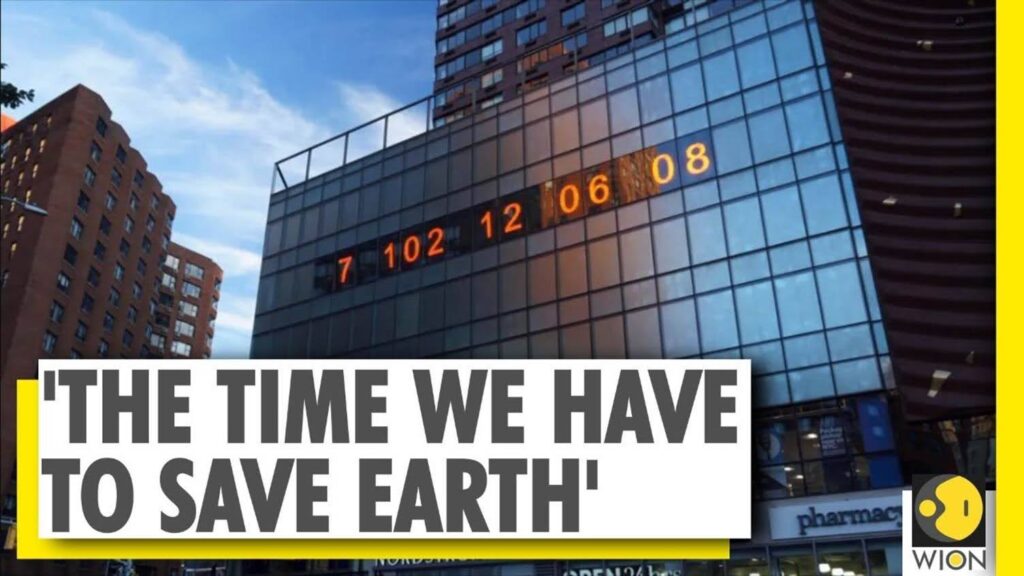
The learned response remains the same:
More.
Growth.
Expansion.
Until it breaks.
We burn out. Systems fail. Power goes down. Again and again, reality reminds us of the limits — and that the seductive 21st-century illusion of invincibility is not sustainable. We are not independent or invincible; we are deeply connected and profoundly interdependent.
Modern life doesn’t make us independent — it disconnects us.
Why “Saving the Planet” Isn’t Enough Anymore
For decades, the environmental movement has tried to remind us of our dependence on the Earth. While I don’t disagree with this message, I’ve come to believe that the familiar call to “save the planet” is not enough. It doesn’t help enough people truly feel — and live — the interdependence that defines our quality of life.
So I want to offer a different starting point:
Our future is defined by our relationships — and by how we nurture them.
Not in theory.
In practice.
In everyday interactions.
In how we work together, make decisions, and move forward.
The Workplace Reveals the Depth of Our Disconnection
The workplace gives it all away.
In most workplaces, fully capable adults are closely monitored, managed, and assessed, often while working in silos. We increasingly rely on sophisticated tools, data, and artificial intelligence to tell us what to do, how to connect, and how fast to do it.
And I find myself wondering:
Were we not previously able to do this in a far more connected way — with struggles, yes, but the kind that arise when humans actually engage? Struggles that, given time and care, can be resolved through honest conversation.
As technology increasingly leads our lives — from dating to shopping to monitoring — I fear we are forgetting one of our most essential human capacities: the ability to connect. To have honest conversations. To notice how someone is really doing and respond with care. To feel the seasons and recognise the gifts they bring. In the pursuit of efficiency, connection is increasingly outsourced — and with it, our relationships with one another.
If we don’t practice real connection in our daily work, we can’t expect it to appear when facing collective challenges.
Connection Feels Inefficient — But It Is the Foundation of Collective Progress
Guilty as the next, I find this tension especially striking when I think of the ticking climate clock. Is it realistic to expect a connection to our surroundings to suddenly appear when we don’t practice it in our daily lives?
Take work again.
If we don’t come together as teams to clarify what we’re doing, why we’re doing it, and how we’ll move forward together, how can we expect collective progress?
Connection is messy.
It takes time.
It can feel inefficient.
But it is precisely in that struggle that clarity, relationship, trust, and energy are born.
This is why how we work together matters so deeply.
The way we relate to one another today — within organisations, communities, and systems — is shaping the future we are moving into. A future led by bots, built on mistrust, avoidance, and fragmentation, will never be sustainable. A future rooted in relationship, connection, human intelligence, and common ground just might be.
Technology Can Support Us — But It Cannot Do the Living for Us
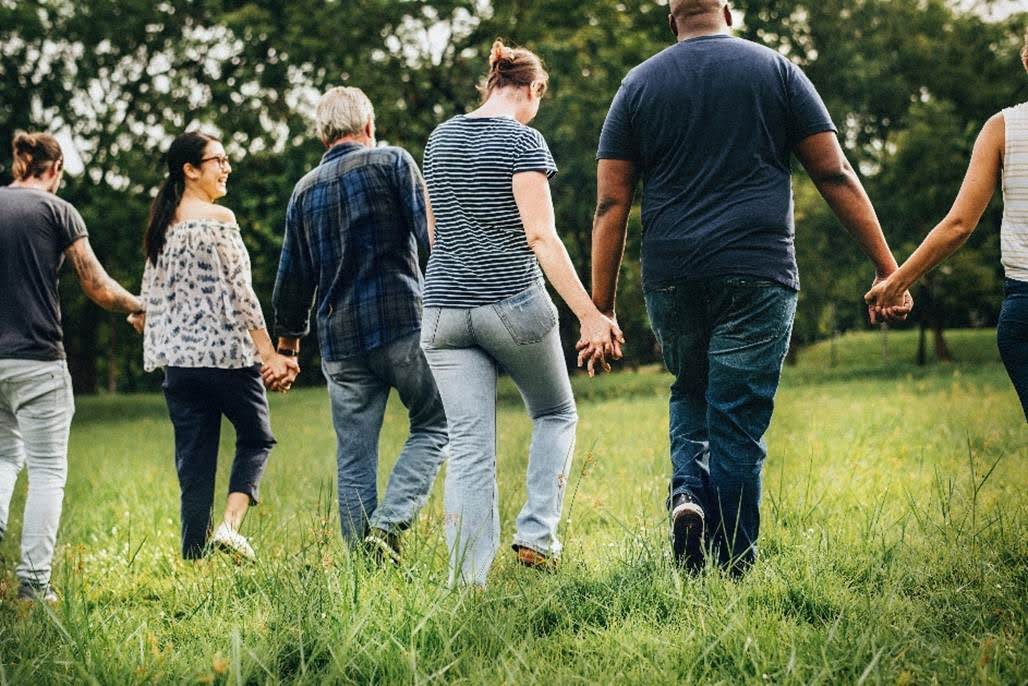
Which is why our future demands that we become more human again.
Because the future is ours.
We are the ones who have to live here.
Not AI.
Not algorithms.
Not forecasts or frameworks.
Us — messy, imperfect, emotional, creative humans.
Sure, technology can support us.
But it cannot do the living for us.
An Invitation to Build a Relational Future
When conscious, connected individuals come together, something powerful happens. They listen. They challenge one another. They collaborate in ways that have shaped humanity’s most meaningful breakthroughs. When left to our natural, relational selves, progress may take longer — but we build the collective capacity to navigate complexity in ways algorithms can only dream of.
That collective capacity sets the precondition for a healthy future — one built on relationships rather than isolation.
To live in symbiosis rather than separation.
Much like when we once ate in season, spoke to strangers in public, and used our human intelligence to solve problems together at work.
To be clear: this is not a rejection of technology. Technology is a remarkable tool — one that will always be with us. But it should not lead us, nor replace our human intelligence or our innate ability to connect, sense, and discern. It should complement us, not dictate to us.
Philosopher Glenn Albrecht offers a powerful name for this shift: the Symbiocene — an era shaped by symbiotic, rather than exploitative, relationships between humans and the rest of the biosphere.
Because our future is defined by our relationships — and by how we nurture them, right here, together.
—
By Stephanie Bartscht
Founder of EVERiSE
Sustainability starts within.
I work with brave leaders and leadership teams who can feel the future knocking and want to answer with clarity, connection, and confidence. Through EVERiSE, I help organisations navigate complexity from the inside out — so sustainability becomes something people can actually live.