

When I say the word system, what do you think of?
Computers? Ants? The invisible hand that dominates the world?
When I think of systems, I think of connection. Hyper connectivity. I think of all the living beings on earth, interconnected with an invisible string. I get a warm, fuzzy feeling inside whilst, in parallel, becoming totally overwhelmed by the extent of our collective connectivity.
Originating from the Greek word: systema, meaning organized whole, a whole compounded of parts. I’ve learnt that people find the word unrelatable and overly academic. I see this as a problem, and I’d like to share why.

The Adaptation Delay
The world is changing. And always will. This we know.
But at the moment, we seem to be seeing more businesses collapse due to our changing world than survive. So what’s happening? Why are we not adapting fast enough to get ahead and master the threats of change? Is it impossible…or is there a way to reignite our adaptive superpower to gain collective confidence in the potential of our bright future?
Back to the word system. If one of the key changes in our world is that we are more connected than ever, then that also holds the solution to this costly problem.
We have been designing the parts while ignoring the whole.
If we look at the anatomy of most organizations, employees work in departments defined by functions. Siloed and isloted everyone is busy with their part, delivering on their specific metrics.
… And slowly this fragmentation is costing us everything.
As the future knocks, it’s bringing with it topics and themes that don’t seem to belong to just one department or siloe.
Where do we do sustainability? … and equality?
When do we innovate? And who’s responsible for that?
It’s becoming clear that today’s business challenges do not respect traditional silo and departmental boundaries. Ai, CO2, human rights, waste & efficiency… These are all “shared problems” that no single team can solve in isolation. They require a level of connectedness and relationship that most traditional silos simply aren’t built for.
These are systemic problems. They belong to the system and fall on everyone to address. The ongoing changes in our shared environment, aka the system, are affecting us all, and to get ahead, they need to become everyone’s business. Literally.
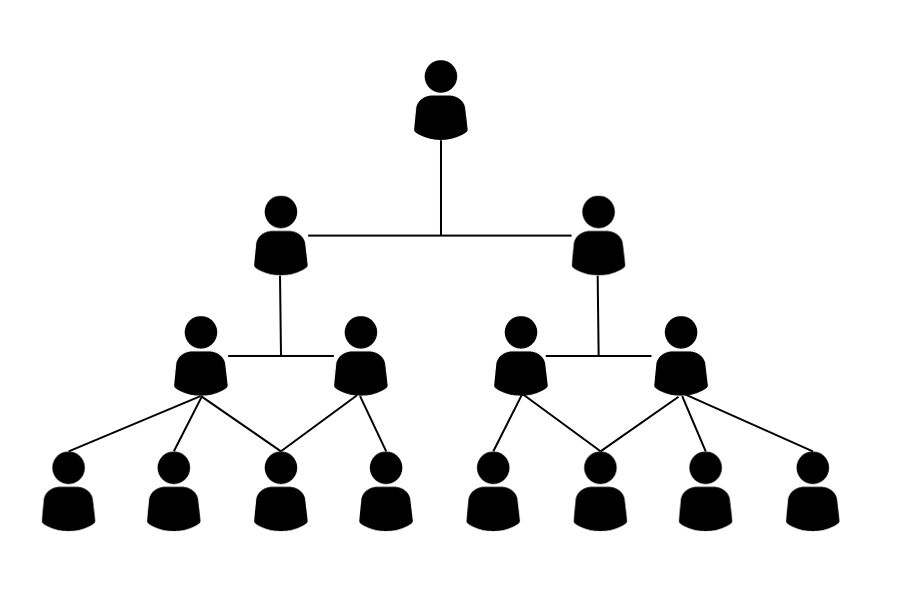
From Isolated to Connected: Moving Beyond the Era of the Silo
As challenges are surmounted, it’s becoming clear that the era of the “silo” is delaying us and that the era of the “system” is emerging. Although some departments are already tasked with solving shared problems (innovation, sustainability, ED&I), they are often overwhelmed and understaffed. Whilst siloed functions don’t see the system problems as theirs to solve, there is simply too much for the small group to create progress. The gap between those who deal with change and those who do not is growing, and with it, the cost is rising.
As we are urged by our changing world to move from isolated to connected ways of seeing and working, the big shift lies in recognizing that responding to change is a shared task. By coming together with diverse skills, we can overcome anything.
For businesses and their organizations to thrive in these wild and wonderful times, the call to action is clear: it is time to bridge the gap and move from operating in isolated parts to perform and deliver as a connected whole.
Everyone’s Business: Our Shared Future
If we zoom out to the biggest system that connects us all, it is the shared planet we all inhabit. Which, you most probably have noticed, has been changing a lot recently, and much to our own detriment. Until now, in most businesses, dealing with this has been assigned to a budget-free department with little decision-making authority. Not ignoring the valiant and great work done by these professionals, I think we can all agree that the results have not been as effective as we hoped (as explored in the article Sustainability Starts with the Self). The agenda needs to evolve.
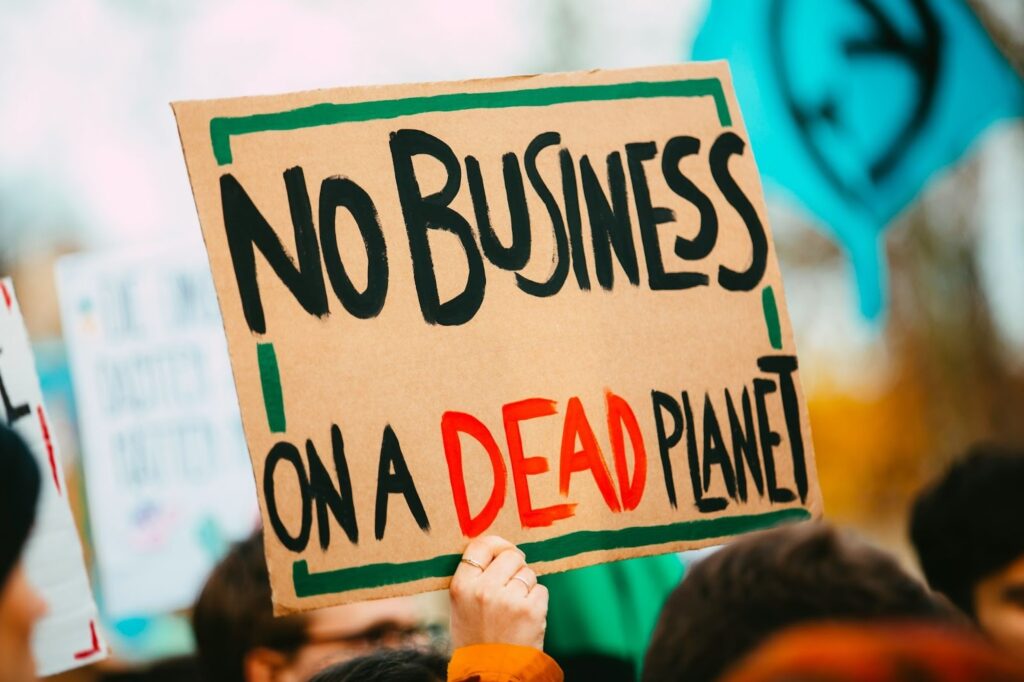
The Mindset Shift
The topic of sustainability is perhaps the ultimate example of acting in honor of the system. It is a broad umbrella term for anything that could, should, or would be good for the planet and its inhabitants. Unfortunately, many systemic issues have been hidden in the sustainability agenda for too long, and it is costing every business a large “adaptation gap” bill.
Often, these ambitions are treated like an add-on “sticker” or a certificate to signal that a business cares, but the reality is that sustainability is never “done.” To serve the endless changes the system presents is an infinite task that begins with a total re-inspection of the entire business ecosystem. Any claim to be dealing with systemic problems without taking a systemic perspective can only ever be a superficial fix.
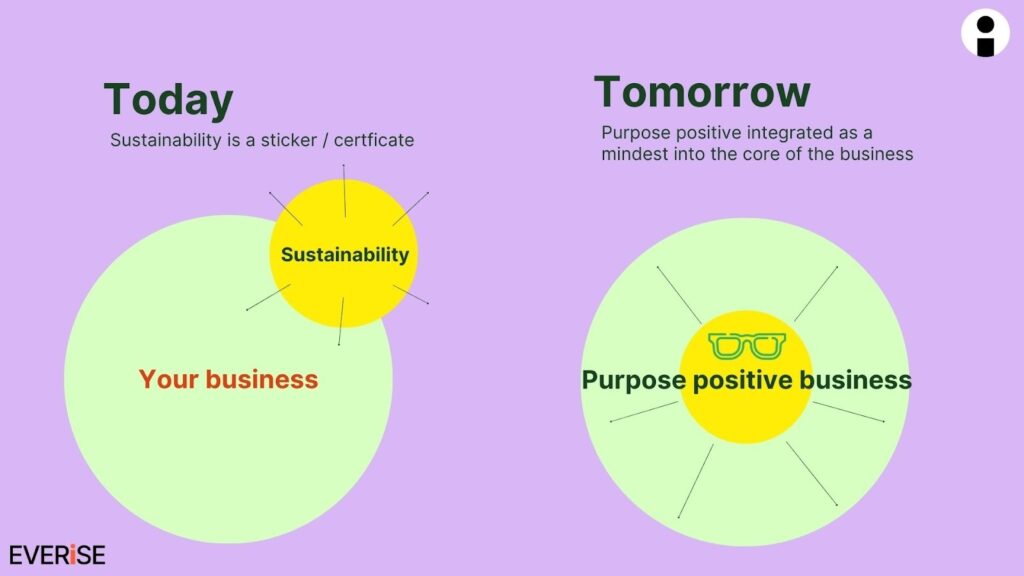
Business as a Vehicle for Purpose Positive Change
As the planet heats up, we are being forced into the era of the system. Every person and every business is being invited to re-inspect their way of seeing and responding to emergent changes.
The invitation is to move beyond seeing and solving problems in isolation. Instead, we must navigate the whole together. We need to identify the priorities the system needs to survive and respond to them through cross-functional, cross-departmental, and cross-personal shared ownership. It’s time for a renewal in how we do business.
Paul Polman (sustainability pioneer and ex-CEO of Unilever) says it perfectly:
“The question facing every board and CEO today is not just what your company sells, but what it stands for, and whether your model is built for the world that’s coming or the one that’s already gone”.
The questions that every business needs to ask itself right now are: What is our purpose, and how is it positively serving the changes of our shared system?
Crack this, and your future is bright!

Just imagine an organization where burnout among “sustainability leads” or “innovation managers” disappears, not because we lowered our targets, but because we finally stopped isolating the responsibility. Imagine a company where every person, from the boardroom to the front line, understands their role in this interconnected web.
To thrive into the future, we must reignite our adaptive and interconnectivity superpowers. If every business and organisation could break down its silos and ignite a shared responsibility to act in response to changes affecting the whole, we would cease playing catch-up, paying high costs, and instead become proactive architects of the future.
What Comes Next?
If you haven’t realised yet… We are on the verge of a profound evolution. Moving from acting as “isolated parts” to a “connected whole”. This is not just a management strategy; it is the only way to ensure the future remains a place where we can thrive, from business to personal life.
But seeing the system is only the first step. The real challenge is how we act within it. If the era of the “silo” is closing, what exactly does it mean to replace that “sticker-on-the-wall” sustainability with a living, breathing mindset and strategy that touches every department, every product, and every person?
In my next article, I will share the framework for that future. We will move beyond the theory of the system and into the tangible, three-fold mindset of the Purpose Positive business: where every action is distinguished by its consideration of enabling Fulfilled People, to live Energy-Positive, and Waste-Free lives.
—
By Stephanie Bartscht
Founder of EVERiSE
Sustainability starts within.
I work with brave leaders and leadership teams who can feel the future knocking and want to answer with clarity, connection, and confidence. Through EVERiSE, I help organisations navigate complexity from the inside out — so sustainability becomes something people can actually live.