

We have the technology, the funding, the absolute best talent, and weekly climate disasters reminding us we urgently need to evolve to a more resilient and symbiotic way of living…

Photo by Nathalia Segato on Unsplash
The pieces of the puzzle are all right here in front of us… Yet, when you look at the macro data, it feels like the sustainability movement is momentarily stalling, annoyingly caught up in a restrictive web of bureaucratic compliance and incremental targets instead of igniting the much-needed revolution in how we do business.
Installing New Software on an Old Operating System
But why is this happening? What is stalling the flow? Could it be that we are approaching the movement from the wrong angle? I believe the answer is yes, because we are trying to install new regenerative software onto an old, extractive operating model. And honestly, I’m desperate to do something about it.
It’s time for everyone to rise…into a new mindset.

Photo by Declan Sun on Unsplash
Over the last 20 years, we have seen the rise of sustainability departments working to put the mechanics in place to operate at net zero, shift to renewable energy, and advance justice and inclusion.
Too often, though, these pioneers find themselves drowning in conversations and tasks like doing the carbon math, supply chain audits, understanding regulatory disclosures, and making reports that too few people read.
Sure, we are making progress, but we can all be candid and admit we need to do a lot more. The drive and responsibility for this unfortunately slow revolution are borne by too few people, and as the future knocks louder, we are being invited to reflect and discern whether there is another, more effective way to mobilize the masses…
Shifting Focus from Mechanics to Mindset: Where Systemic Change Actually Begins
What if we started the conversation somewhere entirely different? What if, instead of focusing on mechanics, we focused on the real starting point: People and the mindset driving their every decision?
To flourish into the future, we have a beautiful opportunity to update our collective operating system. And I’m not just talking about A.I.! To reshape our linear, waste-spitting economy into something resilient and flourishing, we are being invited to go right back to the beginning. Right to the exact spark where intention is born, and ideas are formed…
Design Is Intention: What Etymology Reveals About the Root of the Climate Crisis

When I was 19, I studied Interdisciplinary Art & Design. I became obsessed with the influence design has on the systems and world we share. Equally obsessed with language and etymology, I learned early that the etymology of the word design is intention: from the Latin designare, meaning “to mark out or intend.” This shaped how I viewed the world from then on.
If design is the first sign of intention, then that is where the power of influence lies. If we wish (which I do) to change the linear nature of our shared economy, the pivot point lies in how we design things, since everything starts with intention.
Everything around us, from organizational structures to business models, products, and services, was at one point intentionally designed. The climate crisis and social inequalities we face today are no accident or surprise. They are the logical output of a system designed for extractive and exponential growth.
After many observations and 20 years, my understanding has evolved to the realization that, to avoid any further disadvantageous logical outcomes, the pivot point lies in becoming aware of what drives our intent and evolving it into a more system-conscious intention to serve a better future.
Design is intention: If our current industrial output is extraction, it is because the way we planned it intended to make it so.
The incredible opportunity of our time is that we are being nudged to redesign our intent—to go right back to the beginning, look inward, and relearn how to respond to the whole system rather than just its isolated pieces.
Many leading organizations are already paving the way. They aren’t just sending teams to carbon accounting seminars; they are actively retraining their product and system designers in circular principles to completely reshape how things are made. But this cannot remain a specialized skill reserved just for the design studio.
If we want a true revolution, everyone, from procurement and finance to HR and sales, needs that same upgrade. We need more than just circular products; we need a universal shift in our core mindset to seize the opportunities of the 21st century and win the hearts of the Prosumer (the conscious and proactive consumer driving today’s values-led economy).
And that requires a completely different kind of training…
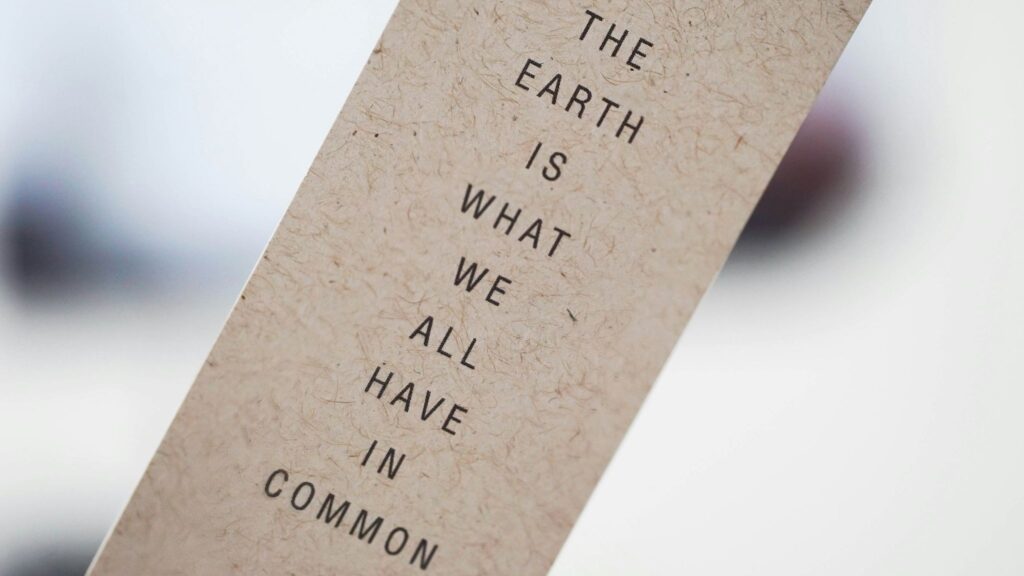
What Is a Purpose-Positive Mindset and Why Does Every Business Need One?
Unmeasurable and nebulous, mindset is a tricky thing to form and discuss. Not a destination, or something to be changed overnight, a mindset is formed and influenced by a series of nudges and conversations. It is the beginning and the end of every intention and arguably the greatest opportunity of our time.
Take a second and think: what mindset is influencing your intentions today?
How often are you talking with your teams about theirs?
If tomorrow we wish for all humans to thrive in a safe and healthy environment (within the planetary boundaries), then every intention made today should be influenced by that.
But who and where are we remembering to integrate that intention into our processes and business plans?
It cannot be an afterthought, or an add-on; it must be the first thought. It must be the beginning and the end of every intention. A sort of consciousness compass that guides and reminds us to think, plan, and act in a way that enables fulfilled people to live energy-positive and waste-free lives through every action planned, not just some. It is a muscle to be trained, and that training starts with intention.
If we are serious about transitioning our economy and organizations from a culture of extraction to one of regeneration and health, the key pivot point where we can create change and really make a difference is in our mindset – by thinking Purpose-Positive to achieve true sustainability.
Three Mental Filters for Training a Purpose-Positive Mindset

Photo by Jakob Owens on Unsplash
Where to start and how to train? Right here!
1. Always Start with Why (The Intentional Filter)
A Purpose-Positive mindset relentlessly questions Why: Why are we doing this? What is the purpose of this intention, and what effects will it have on the system it depends on?
The Purpose-Positive Nudge: What systemic value are we creating through this action?
Starting with Why shifts business language from passive, defensive compliance to active, and intentional intent. When asking why, we engage the heart, head, and hands to ensure our whole being is confident that doing this is the right and valuable thing for now and for the regenerative future we depend on.
2. Anchor in the Three North Stars (The Operational Filter)
A major reason teams suffer from “sustainability paralysis” is that the topic feels overwhelmingly complex. A Purpose-Positive mindset cuts through the jargon and general-ness by anchoring every brainstorm and ideation in the 3 guiding pillars that are always seen as whole/one: Fulfilled People, Energy-Positive, and Waste-Free.
The Purpose-Positive Nudge: Does this intention/decision enable fulfilled people to live energy-positive and waste-free lives?
Tip: Use the Purpose-Positive wheel to nudge your purpose-positive muscle into action. Sure, at first the questions will seem hard, strange perhaps, but after a couple of times answering the questions, you will swiftly activate that muscle and naturally begin asking these at every step in your decision-making process
Like learning any new skill, practice makes perfect. By taking the time to train this way of thinking as a team, we can begin to use these three pillars as a shared mental model. There is no absolute right or wrong here; only ongoing conversations to be had and deliberate choices to be made to actively shape a sustainable future.
Much like training a new muscle, this process can feel uncomfortable, annoying, and demanding. There will be tough sacrifices to make as we realize that if a strategy enables people to be fulfilled but creates unmanageable waste, it is simply not the optimal way forward. But facing that friction together is exactly how we grow—because true systemic change is never a solo endeavor.
The Collective Power to Redesign: From Extraction to Regeneration
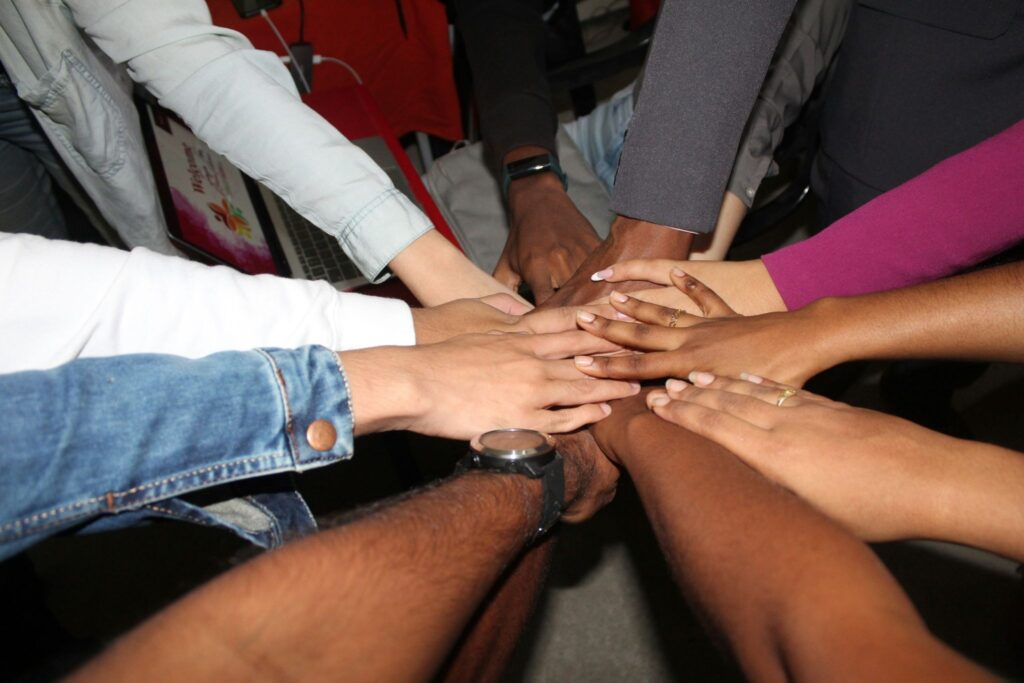
Photo by Rineshkumar Ghirao on Unsplash
Shifting the mindset of an individual, team, and organization is often slow, invisible, and messy work. It requires patience, psychological safety, and a relentless commitment to a healthy future.
It will never be perfect, but the power lies in the intent, in the conscious thoughts and small, daily questions that nudge and influence the decisions that make a real impact. And that always starts with the individual. It is a deeply personal choice that begins on the inside and, once made slowly, sets off an internal transformation that changes how you do everything.
If sustainability is the goal, thinking Purpose-Positive offers an accessible way for everyone, everywhere, to align head, heart, and hands to spark this much-needed revolution of updating how we collectively do business
As long as old, extractive mindsets continue to guide decision-makers and shapers, the journey to a regenerative future will be long and painful. But if we succeed in scaling a Purpose-Positive mindset to the masses, nothing can stand in the way. As in many times throughout history, the collective power of proactivity can quickly spark miraculous outcomes.
When the immense responsibility for change is shifted from that siloed and overwhelmed sustainability department and placed into everyone’s hands, the invisible bottleneck can begin to disperse. In its place, we unlock that collective power that sparks amazing things, inviting and enabling all of us to live fulfilled, energy-positive, and waste-free lives.
If we possess the collective capacity to intentionally design a world of extraction, then we most definitely possess the exact same power to design a world of regeneration. The tools are in our hands, but the revolution begins in our minds.
All it needs now is for you, me, and our entire team to take the step and think Purpose-Positive.
Photo by Maria Thalassinou on Unsplash
—
By Stephanie Bartscht
Founder of EVERiSE
Sustainability starts within.
I work with brave leaders and leadership teams who can feel the future knocking and want to answer with clarity, connection, and confidence. Through EVERiSE, I help organisations navigate complexity from the inside out, so sustainability becomes something people can actually live.